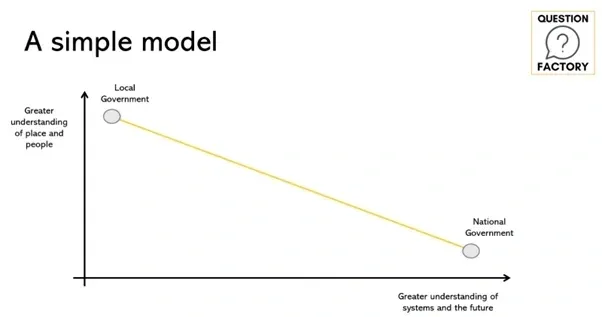
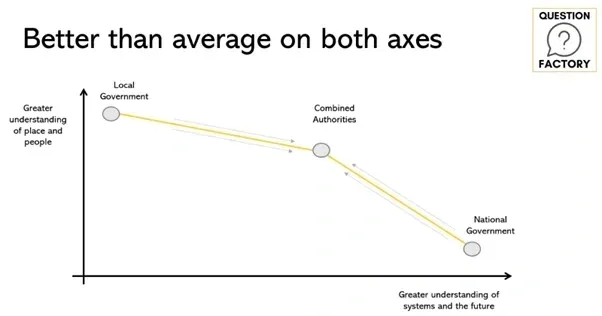
I braved the trains recently, heading over from Manchester to Liverpool for a seminar on place-based working and collective impact organised by Place Matters and the Liverpool City Region Combined Authority.
The star of the show was Liz Weaver of the Tamarack Institute in Canada, which describes itself as developing, ‘collaborative strategies that engage citizens and institutions to solve major community issues across Canada and beyond’. Beyond in this case being Merseyside.
Liz spoke with passion, and from deep experience about the complexities, power and potential of place-based working. She didn’t shy away from the scale of the work that’s required if, to create change amongst complexity, we start with and are guided by people as they define themselves and their goals, and as they interact, in their place.
My take on the practice of place based working stems from my time developing system redesign plans to inform the devolution deals in Greater Manchester. There’s a great summary of the further development of that work in this white paper on unified public services (which reminds me I need to go back and have a re-read, five years on).
Starting with place, for me, means we can recognise the power of existing systems (especially the public service, planning and financial systems that often inform strategy), but also properly value the external context in which they interact.
For public servants, it’s important to be honest that we’re rewarded in large part for our ability to navigate within our professional bubble; getting things done and knowing what’s driving internal decisions.
A place based approach can pierce that bubble and push back on professional and managerial obsession with intrinsic rationality (taking decisions because they make sense within the logic of one system or organisation). It’s a key antidote to the endless tug of war to optimise one part of a system at the expense of people and places.
Starting with place also brings a hugely empowering focus on practical, asset-based problem solving to amplify energy and sustain meaningful change.
Under the right public service leadership, it’s already possible to join-up teams, data and infrastructure; invest in new skills and tools to develop a deeper understanding of a place and its communities; and empower practitioners to flex policy and deploy resources in order to get the right result at the right time.
But it’s hard work, which is why it’s inspiring to hear people like Liz talk with authority and conviction about how to make progress on such a broad canvas.
She shared the models and methods that were working for Tamarack and the communities they are engaged with — in particular the collective impact framework — as well as stories of local action and the gradual evolution of national policies that have helped reduce poverty in Canada from 14.5% in 2015 to 7.4% in 2021.
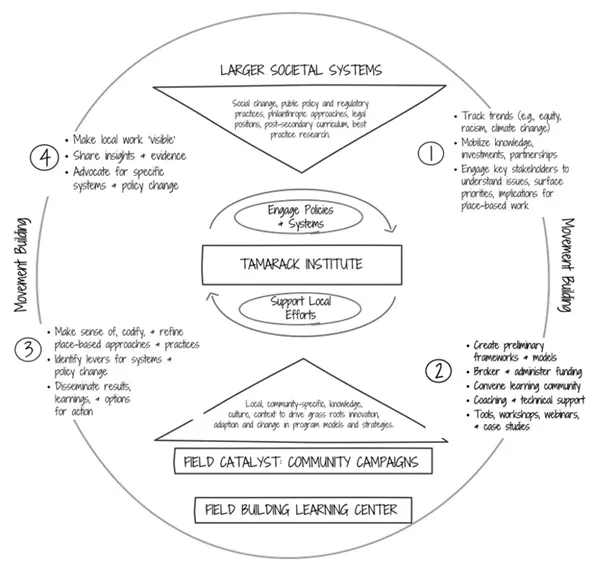
In the model below the Tamarack institute explains its role, acting as a ‘field catalyst’ (practice and experience convener + case-maker) and engaging with the larger societal systems recognised above, from this point of insight and understanding.